Published by Online Dating Guide
The best first-date idea matches the amount of certainty you actually have
Let the amount of prior conversation set the date’s commitment. A short exchange or uncertain schedule calls for 45 to 60 minutes in a public place that is easy to locate and reach. Choose a venue with practical access for both people, such as convenient transit or parking, seating, and an obvious meeting point. Longer messages, specific shared interests, and a clearly open afternoon support a meal or an activity with more structure.
Suppose the chat has already landed on an outdoor interest: “Which part did you enjoy?” “The walk along the river.” “What made that stretch memorable?” “It was quiet, and I liked being outside.” Those words point to a simple walk, not a high-effort event. A fitting next step is: “Want to get tea near [area] this Saturday afternoon, then take a short walk if the weather is good?” The tea gives the plan a clear starting point, while the walk stays optional.
Short conversation-led formats make it easy to assess mutual interest
Coffee and tea give the conversation most of the space and keep the expected spend modest. Dessert offers a similarly short evening option for someone who says, “I’m more of a dessert person.” Casual drinks suit people who already prefer that setting, while a brief meal gives more time but carries a longer seating commitment and a higher expected cost. The reply “Tea sounds better” is a preference about the format, so adjust the plan to that answer instead of reading extra meaning into it.
Activity dates work when the activity supports rather than replaces talking
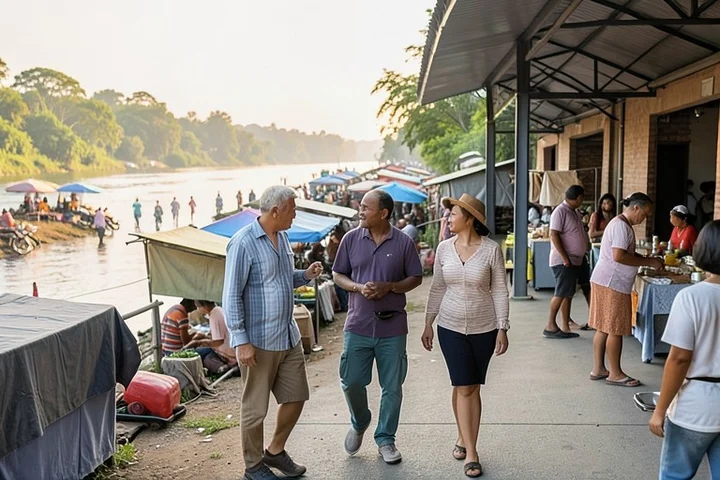
Walks, markets, museums, and shared-interest events give two people something concrete to notice, which eases the pressure of constant face-to-face conversation. Each has a cost. A walk is low-cost but exposed to weather. A market creates natural pauses for browsing, though those pauses also interrupt longer stories. A museum offers prompts and shelter, but exhibits may pull attention away from the conversation. A concert, game, or class leaves limited time to talk during the main event.
Use the activity named in the conversation to set the pace. “You mentioned you like old buildings. Want to walk through [area] Saturday at 2 for about an hour?” If the answer is, “Yes, as long as we have an indoor option if it rains,” answer directly: “Let’s meet at the museum café there, and we can see a small exhibit if the weather turns.” The museum becomes a weather backup and a source of conversation, not an obligation to spend the whole afternoon inside.
Turn the selected idea into a clear invitation with a bounded plan
A clear invitation includes the activity, general area, day or time, approximate length, and a simple alternative. “We should hang out sometime” leaves every useful detail unanswered. A more usable version is: “I’ve liked hearing about your bakery experiments. Want to meet for coffee near [area] Sunday at 2? I’m thinking 45 minutes to an hour. If coffee is not your thing, dessert nearby would be great too.”
The other person has an easy way to accept or revise the plan: “Sunday works, but I’d prefer tea.” Reply with the changed detail: “Tea near [area] at 2 it is.” This keeps the invitation specific without turning it into a rigid itinerary. If the proposed time is unavailable, offer one concrete replacement: “How about Saturday around 11 instead?”
Activity-Date Trade-Offs
“Something low-key” favors an activity with a loose pace, such as a market or a short walk. Coffee and tea maximize talking time with minimal planning. A walk reduces cost but needs a weather-aware backup. Markets and museums supply easy topics, though browsing or exhibits break up the conversation. Shared-interest events create an immediate subject, but tickets, fixed start times, and limited talking time make them better when both people already sound enthusiastic about the event itself.
The strongest first-date plan is small enough to feel easy and specific enough to answer. Pick a format that fits the conversation you have already had, then name the place, time, length, and fallback.