Published by Online Dating Guide
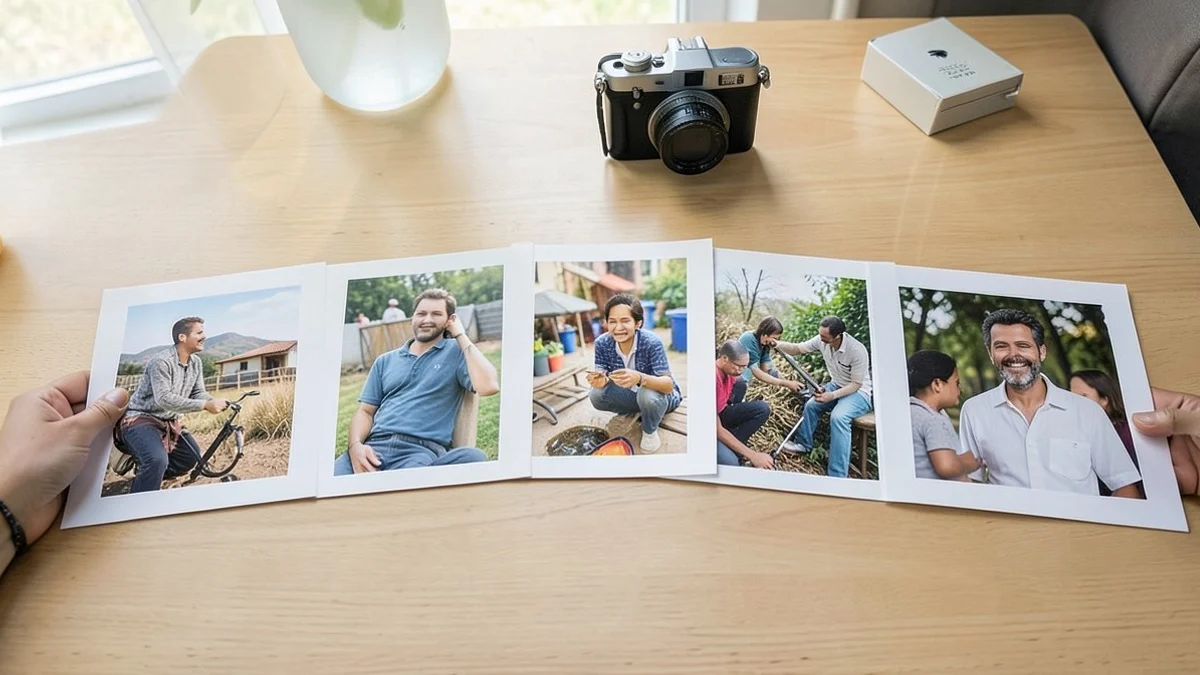
Start with photos that still show you accurately

- Photos captured within the last year form the starting set. Include ordinary moments as well as planned pictures, provided your current appearance remains clear.
- Current hair, body, and everyday presentation should match what someone would see when meeting you. Remove images that show a substantially different version of you, even when the picture looks especially flattering.
- Mostly old or unclear candidates call for a small new set before publication. A friend can take several simple pictures in good light and a familiar setting.
- Keep images that represent your appearance and dating intentions without heavy alteration. Save only candidates that still feel accurate when viewed beside a recent photo.
Make the first photo immediately recognizable
- One person should appear in the lead frame, with no companion who could be mistaken for the profile owner. Criterion: Solo identity
- Your face needs to be unobstructed, reasonably close, and easy to recognize. Sunglasses, hats pulled low, hands, and dramatic shadows belong in supporting images at most. Criterion: Face visibility
- Even natural or indoor light should reveal your features. Dark, blurry, distant, or crowded images fail the first-photo test. Criterion: Distance and light
- Light adjustments that preserve your appearance are compatible with an honest lead. Face-shaping effects, strong smoothing, and filters that change your features are not. Criterion: Editing
- A simple head-and-shoulders or waist-up crop usually gives enough context for recognition while keeping distractions out of the frame. Criterion: Crop
Building a set that adds context instead of repetition
- Place the recognizable solo image first. It answers the basic question of who owns the profile.
- Add one current full-body image with a natural stance and an uncluttered background. Its purpose is broader visual context, not a staged pose.
- Include a picture from an ordinary part of your life, such as a casual outing, a meal, or a relaxed weekend setting. The scene should add lifestyle information without exposing a precise home or workplace location.
- Add one activity or hobby image that reflects something you actually do. When the activity hides your face, place clear solo images before it and let the picture serve as context.
- Use a third, fourth, or fifth supporting image only when it contributes a new angle, setting, outfit, or activity. Repeated poses and nearly identical selfies weaken the set.
Reviewing selfies, group shots, filters, and backgrounds
- Problem: Too many selfies Risk: A small number of strong selfies can fit the lineup, though several front-camera images often repeat the same angle and setting. Keep one when it adds something useful; replace duplicates with broader context.
- Problem: Unclear group photos Risk: One group image at most keeps your identity clear. A crop works only when viewers can still identify you; otherwise, leave the image out.
- Problem: Obscured faces Risk: Sunglasses, helmets, masks, hair across the face, and distant action shots reduce recognition. Activity pictures with an obscured face belong after clear solo images.
- Problem: Heavy filters and misleading crops Risk: Effects that alter facial features or conceal your current appearance undermine accuracy. Tight crops that cut off useful context also make the lineup harder to understand.
- Problem: Identifying backgrounds Risk: Check every photo for a home address, workplace name, child, license plate, school detail, or other information you want to keep private from strangers. Crop the detail out or exclude the photo.
Publish the lineup after a recognition check
Before publishing, place the clear solo lead first, followed by the full-body, everyday, and interest images; add an extra solo or carefully chosen social image only when it contributes something new. Exclude old or inaccurate photos, filtered or dark lead candidates, ambiguous groups, repetitive poses, and any frame showing a home address, workplace identifier, child, license plate, or other personal detail. A recent acquaintance should recognize you from the first image and understand a little about your life from the rest; if that test fails, take new photos and repeat the lineup check.